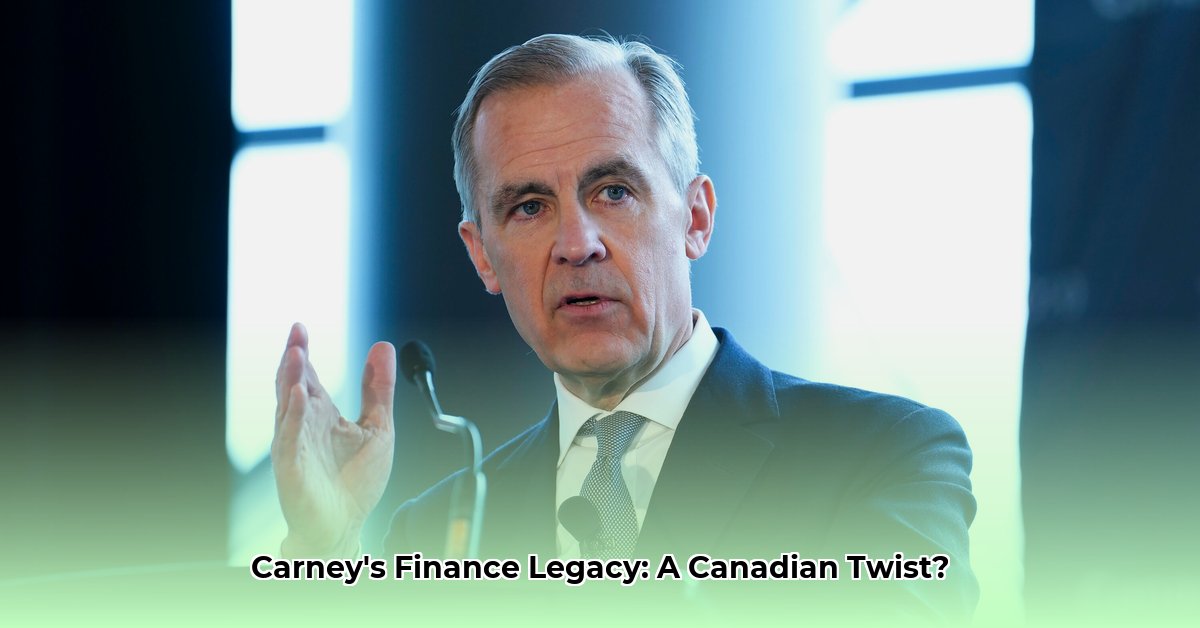
From Wall Street to Ottawa: A Financial Heavyweight's Political Journey
Mark Carney's career trajectory—from Goldman Sachs to leading the Bank of Canada and the Bank of England, and finally, a foray into Canadian politics—is anything but typical. This narrative examines how his extensive financial experience shaped his political strategies and potential impact on Canada. Did his financial acumen translate into political success, or did his unique background present unexpected challenges? This article explores these questions, providing an in-depth analysis of his path. For more on his financial background, see his net worth here.
Carney's years at Goldman Sachs, followed by his leadership of two major central banks, immersed him in the heart of global financial markets. He wasn't simply analyzing numbers; he was a key player in navigating global financial crises. This firsthand experience provided him with an unparalleled understanding of international finance, regulations, and their real-world consequences. This expertise, coupled with his reputation for clear communication, laid the groundwork for his future political endeavors. But could this experience alone be enough to succeed in a vastly different arena?
His transition to Canadian politics raised immediate questions. The jump from managing global financial systems to the complexities of political campaigns presented a significant hurdle. However, his prior success had already built considerable name recognition—a crucial asset in the political realm. He used this pre-existing reputation to gain immediate credibility within Canadian political circles.
But building credibility was just the first step. Maintaining it within the intricacies of Canadian politics presents a formidable challenge. Could financial expertise translate into the ability to connect with the electorate and understand their needs?
Analyzing the financial aspects of Carney's political career necessitates a thorough examination of his financial disclosures and a vigilant search for potential conflicts of interest. Any individual holding such high-profile financial positions will naturally face intense scrutiny. Public transparency is paramount, and the expectation for this is even higher for those who have transitioned from finance into politics.
Key Insights into Carney's Financial Impact on Canadian Politics:
- Unparalleled Economic Expertise: Carney's career provided him with an unrivaled understanding of monetary policy, risk management, and global economics, directly informing his political economic policy proposals.
- Crisis Management to Political Strategy: His experience weathering financial storms positioned him as a seasoned leader capable of handling economic instability.
- Strategic Adaptation to the Electorate: Carney's willingness to adapt his political positions to better resonate with a broader voter base, despite criticism, showcases his political pragmatism. It is important to note, however, that this adaptation has raised concerns amongst some about consistency in his ideology.
Isn't it fascinating how a background in high finance could significantly impact political strategy? This case study underscores the intersection of these two distinct yet interconnected fields. Moreover, the high-pressure environments of global finance likely honed his decision-making and communication skills – essential for succeeding in the political arena.
His global reputation, built on navigating complex financial scenarios, offered a significant advantage in Canadian politics. However, financial expertise alone does not guarantee political success. Navigating the intricacies of Canadian politics required a different skill set—the ability to connect with the people and understand their concerns. This brings us to the question: Did his experience and reputation indeed translate into effective political action and policies?
"Mark Carney's financial background brought an element of data-driven decision-making to the political process, which is often lacking," states Dr. Anya Sharma, Professor of Political Economics at the University of Toronto. "However, the transition wasn't without challenges, particularly in navigating the human element of politics."
Navigating the Complexities: Finance and Politics Intertwined
The long-term ramifications of Carney’s political career remain to be seen. His leadership style, shaped by high-stakes finance, introduces a unique perspective to government. He favors clear communication, data-driven decisions and long-term strategic planning. However, is this approach sufficient to fully address the complex societal and humanitarian issues that shape the political landscape?
His profound knowledge of economics provides a solid foundation for tackling economic challenges. Yet, one must ask: Does financial expertise sufficiently prepare one for the emotional nuances and human drama inherent in political decision-making? The answer, as with so many complex questions, is far from simple. The coming years will provide a clearer picture of his ultimate legacy.
The interplay between Carney’s financial background and his political actions is a constantly evolving subject of analysis. Future research is essential to further clarify the complex relationship between his financial expertise and his political decisions. The journey is far from over; the story continues to unfold.